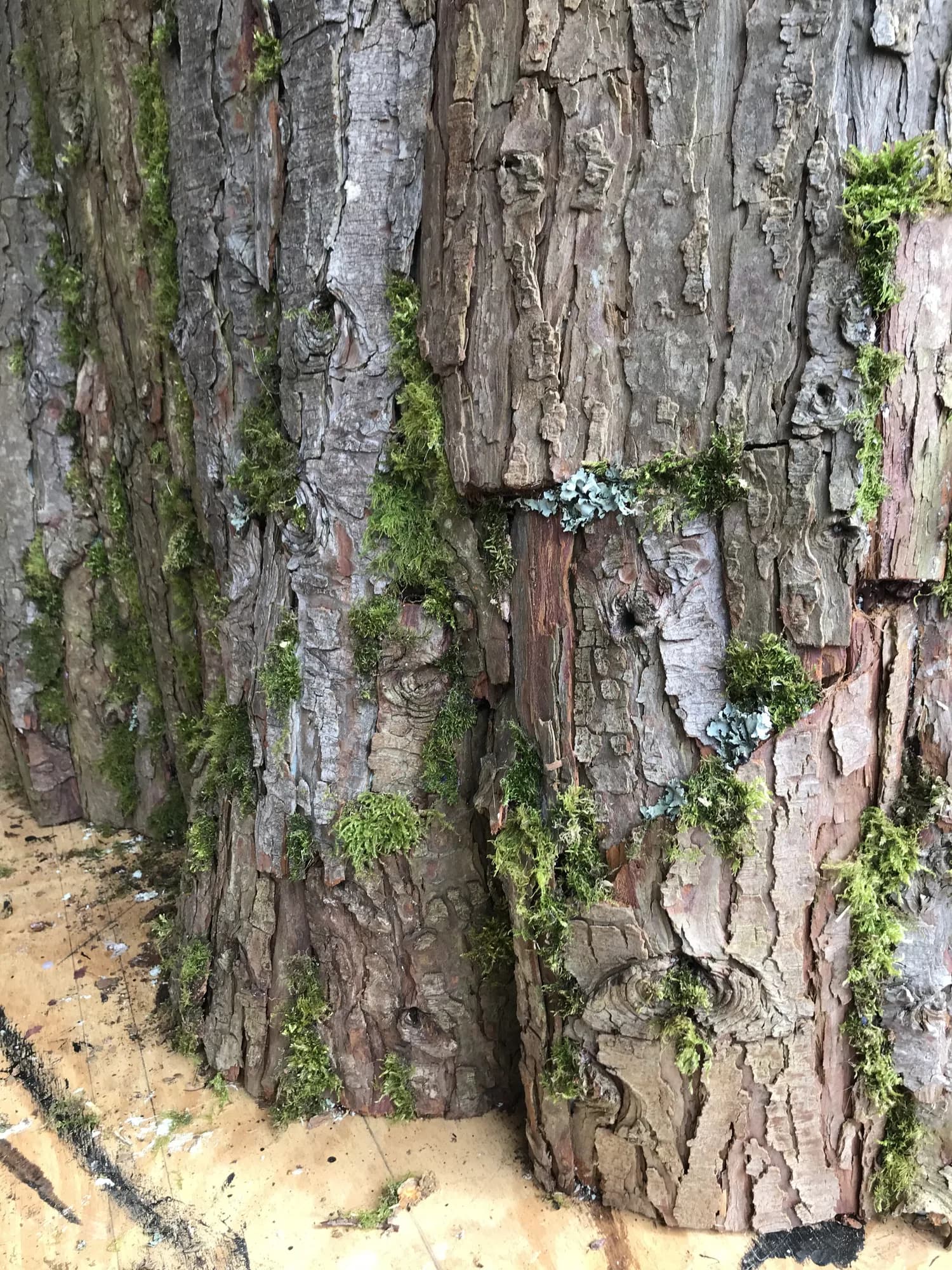
The Woodland
Nearly everything we make starts here, in a wood of coppiced sweet chestnut that we own and manage ourselves. It is not a backdrop or a nice story to tell. It is our timber yard, growing quietly on a twenty-year cycle, and it shapes what we can offer and why our work lasts.
What is coppicing?
Coppicing is cutting a broadleaf tree down close to the ground and letting it grow back from the stump, which we call the stool. The stool is not killed by cutting; it responds by throwing up a cluster of new straight stems. Those grow on for years, and when they reach a useful size we cut them again. A well-managed stool can go on doing this for generations, far longer than a tree left to grow to full height.
Why sweet chestnut?
Sweet chestnut is close to ideal for the work we do. It is naturally durable, high in tannin, and resists rot without any chemical treatment at all, which is why it has been used for fencing and gates in Kent for centuries. It cleaves well along the grain, so it can be riven and cleft rather than sawn, and it regrows vigorously from the stool. On our roughly twenty-year rotation, a stem is ready to cut about as often as we need it.
Is it sustainable?
Yes, genuinely. Because the stool regrows after cutting, coppicing takes a crop of timber without ever felling the wood for good. We cut a different area each year and move on in rotation, so there is always young growth coming and always mature growth standing. Managed this way, the same ground has produced timber for a very long time and will keep doing so. It is one of the oldest forms of woodland management there is, and it works.
Where does our timber come from?
From our own ground, almost always. We fell it ourselves, holding the NPTC chainsaw certificates that work asks for, and we mill it here on site with our Alaskan mill. That means a board can be traced from the standing tree to the finished piece without ever leaving our hands. There is no lorry from a distant merchant, no mystery about the species or where it was grown.
You can stand where the tree stood and see the stool it grew from.
What does that mean for you?
It means the wood in your gate, fence or piece of furniture is traceable, low-mileage, and naturally durable. You know what it is, where it grew, and that no preservative chemistry was needed to make it last outdoors. Chestnut earns its keep on its own merits.
It also means we can match the timber to the job rather than the other way round. Because we open up our own trunks, we can pick a board for its grain, cut it to the thickness a piece needs, and set aside the pieces that will cleave well for riven work. Little of that is possible when you buy timber pre-cut and sight unseen.
If you would like to talk through a piece in chestnut from our own wood, we work by appointment. Call 07888 855 219 or email info@thewoodmanandhiswife.co.uk.
Have something in mind — or a tree with a story?
Tell us what you're after. Most of what we make has never been made before.